Teen Patti: Rules, Hand Rankings, Probabilities and How to Play Online
Last updated: 2026 · Reviewed by the iGaming Bangladesh editorial desk · Educational material, 18+

Last updated: 2026 · Reviewed by the iGaming Bangladesh editorial desk · Educational material, 18+
«As editor-in-chief of a sports-analytics portal, I stress one thing. A deep understanding of the rules and of the mathematics behind card disciplines is the single most important safety factor for a reader. Teen Patti is a traditional South Asian game where calculation, strategy and pure chance sit very close together, which is exactly why it demands a conscious, responsible approach.» Nadia Farzana Haque, Editor-in-Chief, iGaming Bangladesh
Teen Patti is a popular South Asian three-card game, also known as “Indian Poker”, “Flush” or “Flash”. In this guide we break down the fundamental rules, the hierarchy of card combinations, the exact combinatorics and probabilities of every hand, the online formats (demo, live dealer, real money), the legal context for readers in Bangladesh, and the strategic principles behind table decisions.
One note before we start. This is an explainer, not a sales page.
Editorial note (why a sports-analytics desk covers card disciplines): iGaming Bangladesh follows a sports-first editorial approach. Card games such as Teen Patti are covered strictly as analytical and educational material, so we describe rules, mathematics and risks. This article is not an advertisement for any gambling operator and contains no promise of income.
Teen Patti is a card discipline for three to six participants. Each player receives three face-down cards and competes for the common pot. The aim is simple to state and hard to execute: assemble the strongest three-card hand, or force every other participant to fold during the betting round.
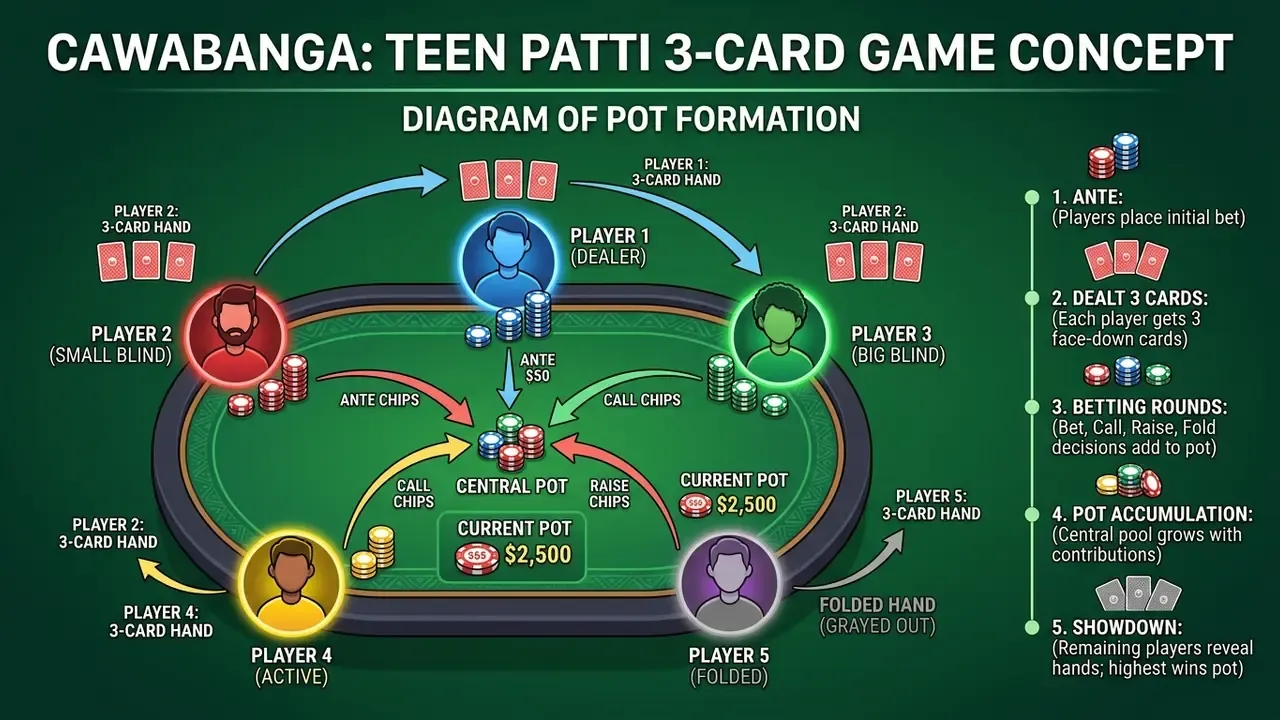
Every player at the table aims to take the pot that has built up. There are two routes to it: show the best hand made of three cards at the showdown, or remain the only participant who has not folded. A classic hand is played by three to six players. The common bank is formed from the mandatory opening contributions (boot) plus the bets placed by players across the betting round.
Although the patti game is frequently called “Indian Poker”, the structural and mathematical differences are fundamental. Unlike Texas Hold'em, where two hole cards combine with five community cards, in Teen Patti every player receives exactly three private cards and there are no community cards at all. Another important distinction: here the action is player versus player, whereas casino three-card poker, including live-dealer Teen Patti tables, is player versus dealer with fixed house rules.
The official Teen Patti rules prescribe a strict sequence of actions, from the mandatory opening boot to the final comparison of cards at the show. The hand is played with a standard 52-card deck without jokers. In home games the dealer is either agreed by the players or determined by drawing cards, with the highest card taking the button.
Each step should be readable on its own, without any graphic, so a reader on a slow mobile connection loses nothing.
The hand begins with the mandatory boot, which forms the initial pot. The size of that boot sets the base stake amount for the whole betting round that follows. Once the opening bets are collected, the dealer shuffles the deck thoroughly and deals three cards face down to each player. Play then moves clockwise, starting with the player to the dealer's left.
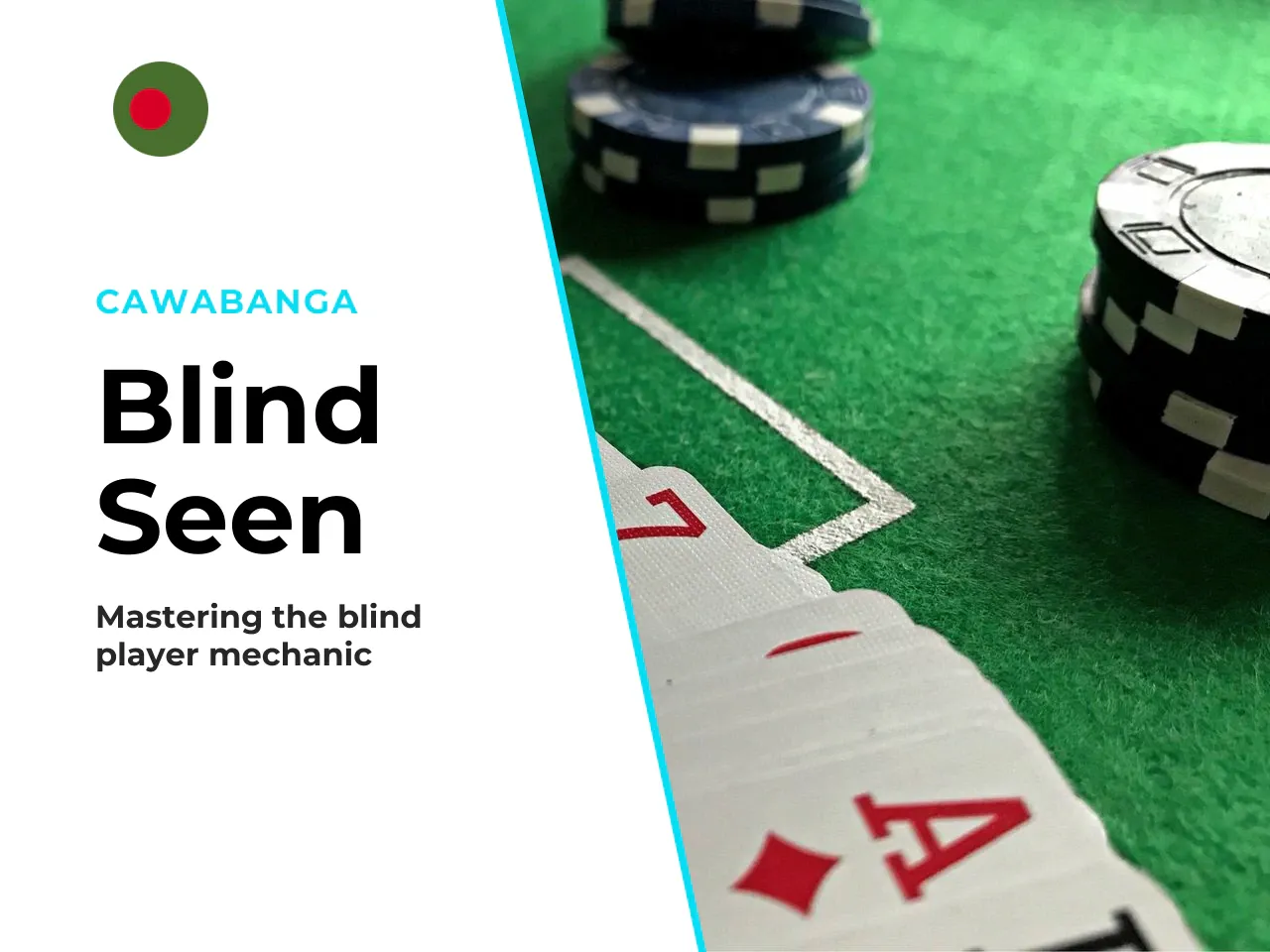
The dividing line between blind and seen status is the key mechanic of the game:
Moving from blind to seen is possible at any moment before the next action. The player simply looks at the cards and from then on bets at the seen-player tariff. In practice, that 2:1 ratio is the mathematical price of information. You pay double for knowing what you hold.
During the betting round the following actions are available:
Always open the rules page of the specific table. Two tables with the same name can pay differently.
Hand strength follows a clear hierarchy of six ranks, and every hand consists strictly of three cards. Card ranks run A-K-Q-J-10-9-8-7-6-5-4-3-2, and the Ace can serve as either the highest or the lowest card in a sequence, so A-2-3 is a valid run.
The three top combinations in the game:
The three lower combinations:
Note one counter-intuitive detail that trips up poker players. In three-card games a Sequence beats a Color (Flush), because straights are mathematically rarer than flushes when only three cards are dealt.
When two players hold the same type of combination, kickers and card seniority decide the winner:
| Combination type | Rule for comparing identical hands | Example of the winning hand |
|---|---|---|
| Trail | The rank of the three cards is compared. | A-A-A beats K-K-K |
| Pure Sequence / Sequence | The highest card in the sequence is compared. | Q-J-10 beats 9-8-7 |
| Color (Flush) | The highest card is compared, then the second and third. | A-K-2 beats A-Q-J |
| Pair | The rank of the pair is compared; if equal, the kicker decides. | J-J-9 beats J-J-4 |
| High Card | Cards are compared in order from highest to lowest. | K-10-4 beats Q-J-9 |
| Full tie (all three ranks equal) | In classic Teen Patti suits carry no seniority, so the pot is divided equally (split pot). | A-K-9♠ ties with A-K-9♥, split |
Updated fact-check on suits. Some guides claim that identical sequences are broken by suit, with Spades ranked above Hearts, Diamonds and Clubs. In standard Teen Patti rules that is not the case: suits are equal and the pot is split. Suit seniority appears only in certain commercial variants, specific operator rule sets or house rules. Check the rules page of the particular table or venue before you rely on it.
Out of the 22,100 possible three-card hands in a standard 52-card deck, frequency is distributed like this:
| Rank | Combination | Number of combinations | Probability (%) | Odds in favour |
|---|---|---|---|---|
| 1 | Trail / Trio (Three of a Kind) | 52 | 0.24% | 424:1 |
| 2 | Pure Sequence (Straight Flush) | 48 | 0.22% | 459:1 |
| 3 | Sequence (Straight / Run) | 720 | 3.26% | 29:1 |
| 4 | Color (Flush) | 1,096 | 4.96% | 19:1 |
| 5 | Pair | 3,744 | 16.94% | 4.9:1 |
| 6 | High Card | 16,440 | 74.39% | 0.34:1 |
Three practical conclusions follow from this table:
Note on sourcing: these frequencies come directly from the combinatorics of a 52-card deck, where C(52,3) = 22,100, and they match the probability tables published by mainstream Teen Patti references. They are arithmetical facts rather than survey findings.
The result of an individual hand is set by a random number generator or by a physical shuffle. Still, a disciplined Teen Patti strategy reduces unjustified losses and improves bankroll management. That difference matters more than any “system”.
[💬 QUOTE: “In games of incomplete information the key skill is controlling the size of the pot and cutting losses early with weak hands.” iGaming analytics desk]
Purpose: to underline the importance of discipline in card games.
Semantics: blockquote with cite.
The strategic choice between blind and seen depends on the current pot size, your position at the table and how your opponents behave:
Three basic styles are usually distinguished:
Fact check and verification: no strategy or betting system in Teen Patti guarantees a win. Empirical work on skill and chance in card games confirms that dispersion and the structure of the deal make break-even algorithms impossible. «Teen Patti's skill score is the lowest among the four games studied; the formula s = (2x₁ + 4x₂ + x₃)/7 shows the smallest gain in results with experience.» Banerjee et al., Skill vs. Chance Quantification for Popular Card & Board Games, arXiv (2024–2025). https://arxiv.org/abs/banerjee-et-al-2024
In live-casino versions there is one more purely mathematical factor: the built-in house edge, expressed through RTP. No sequence of decisions removes it.
Before any discussion of real-money play, readers in Bangladesh need the legal picture. It directly determines the level of risk.
What the law says. Gambling in Bangladesh is regulated primarily by the Public Gambling Act, 1867, a colonial-era statute that prohibits keeping and using common gaming houses and penalises those who run them or are found in them. The Act was written long before the internet and contains no modern licensing framework for online casinos, which means there is no domestic licensing regime for online Teen Patti operators.
What that means online. In practice the online segment is served almost entirely by offshore platforms. Under the country's telecoms and cyber-security framework, regulators and the Bangladesh Telecommunication Regulatory Commission (BTRC) have repeatedly ordered the blocking of betting and casino websites and related apps, and enforcement actions periodically target payment channels and promotional activity.
⚖️ Legal disclaimer: this section is a general overview for educational purposes and is not legal advice. Legislation and enforcement practice change. Verify the current legal position with a qualified lawyer in your jurisdiction before taking any action. Online real-money gaming may be restricted or prohibited where you live.
The modern iGaming segment offers several ways to access Teen Patti online. Each one matches a specific user goal and a specific level of preparation.
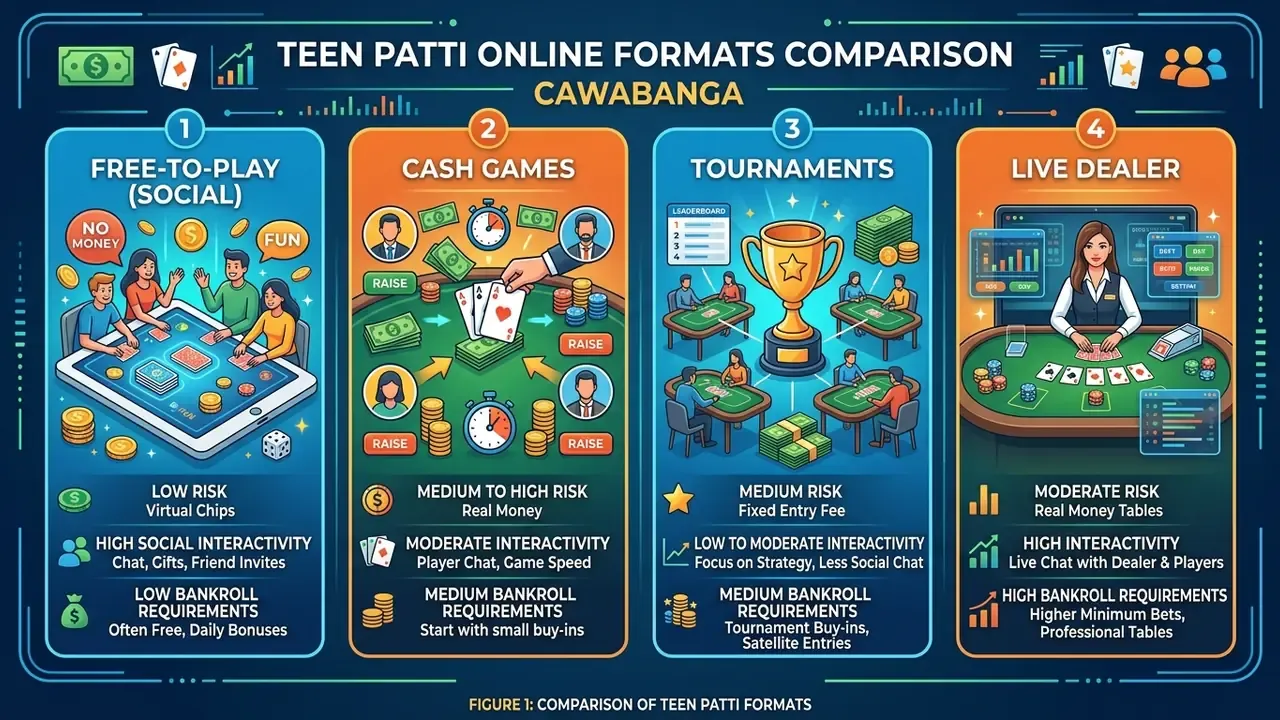
| Parameter | Demo | Live Dealer | Real Money |
|---|---|---|---|
| Funds used | Virtual credits | Real money (usually low minimums) | Real money |
| Financial risk | None | Present | Present, unlimited by format |
| Main purpose | Learning rules and hand ranks | Experiencing a studio table | Playing for stakes |
| Who it suits | Beginners | Players who already know the rules | Experienced, budget-disciplined users |
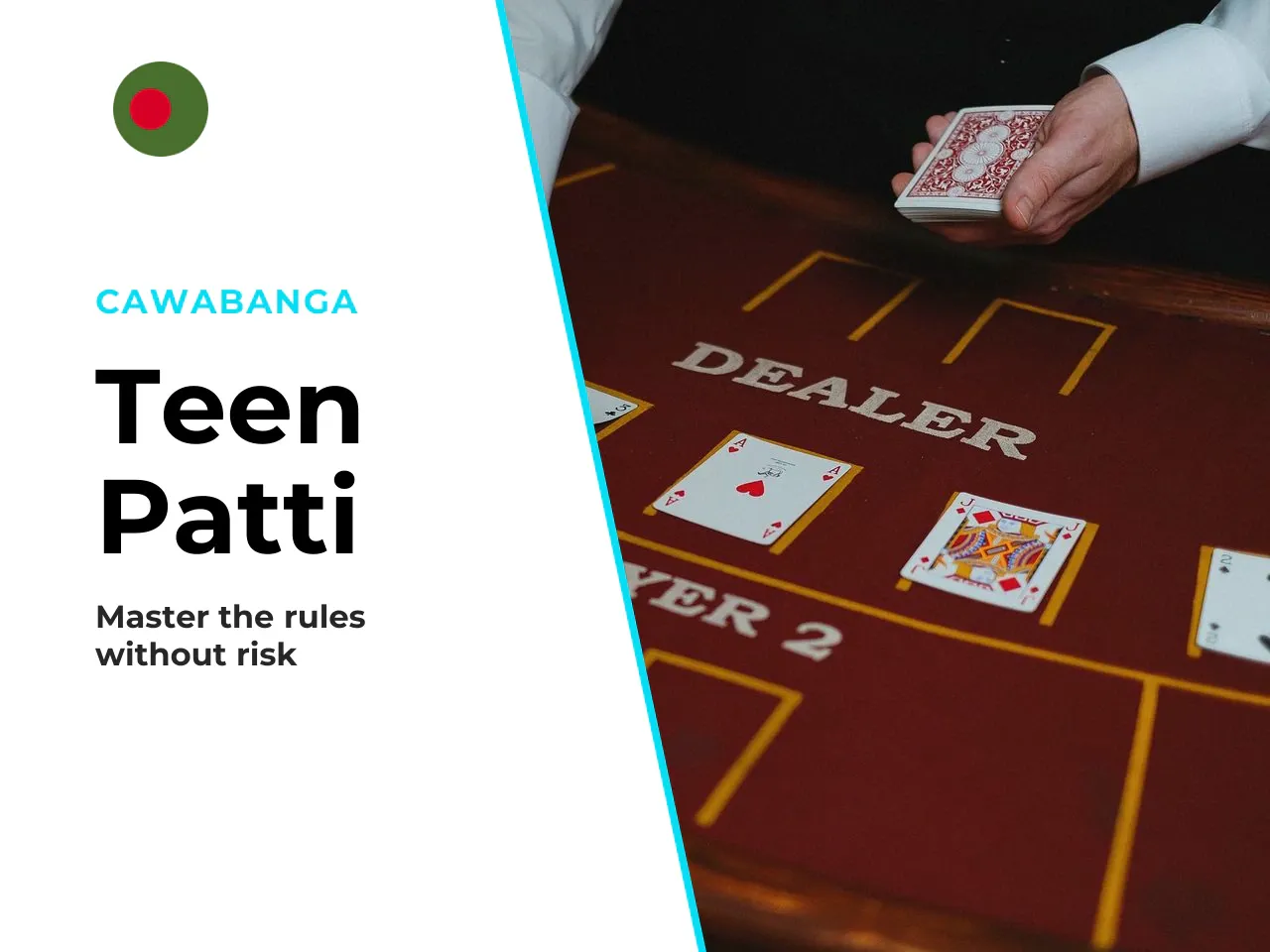
The Teen Patti demo format uses virtual credits and exists for safe study of the mechanics. Demo mode lets newcomers memorise the order of hand ranks, test the transition between blind and seen, and work out how bet sizes are calculated for chaal and sideshow, all without financial risk. Because the virtual balance can be topped up or reset, the same situation can be repeated until the decision becomes automatic.
As part of an editorial review of international player-education practice, the analysts at iGaming Bangladesh note that structured demo practice is the cheapest way to eliminate rule-level mistakes. The classic one is forgetting that a Sequence outranks a Color. (Editorial assessment based on internal review, not a controlled study.)
The Teen Patti live dealer and live casino formats combine a digital interface with a direct video stream from a professional studio. Readers who want to see how such tables are organised can compare live casino platforms with professional dealers before committing any funds. A live dealer deals physical cards on the table while optical card-recognition sensors read them instantly and pass the data to the system.
Live casino Teen Patti frequently includes additional side bets such as Bet on Teen Patti, 20-20 Teen Patti, Pairs Plus and Mega Bonus (6 Card Bonus). These let you wager on the appearance of specific combinations independently of the main outcome of the round.
In live-dealer games from Playtech, Evolution or Ezugi the mechanics differ from player-versus-player Teen Patti. You play against the dealer's three-card hand.
How a round works. An Ante bet puts you in the main game. Three cards are dealt to the player position, after which you choose to Fold, forfeiting the Ante, or Play, which adds an automatic Play bet equal to the Ante. The dealer then draws three cards and the hands are compared using three-card poker ranks, remembering that a Straight beats a Flush.
1. Dealer qualification rule. The dealer's hand qualifies only if it contains a Queen or better.
2. Ante Bonus. This is not a side bet but an automatic bonus on the Ante, paid on the strength of the player's hand whether or not you beat the dealer, provided you chose to Play. Playtech's version pays the Ante Bonus on a Straight, a Trail and a Straight Flush, which is slightly more generous than versions that omit the Straight Flush payout. Precisely this bonus lifts the theoretical return of the main game.
3. Theoretical return to player (RTP).
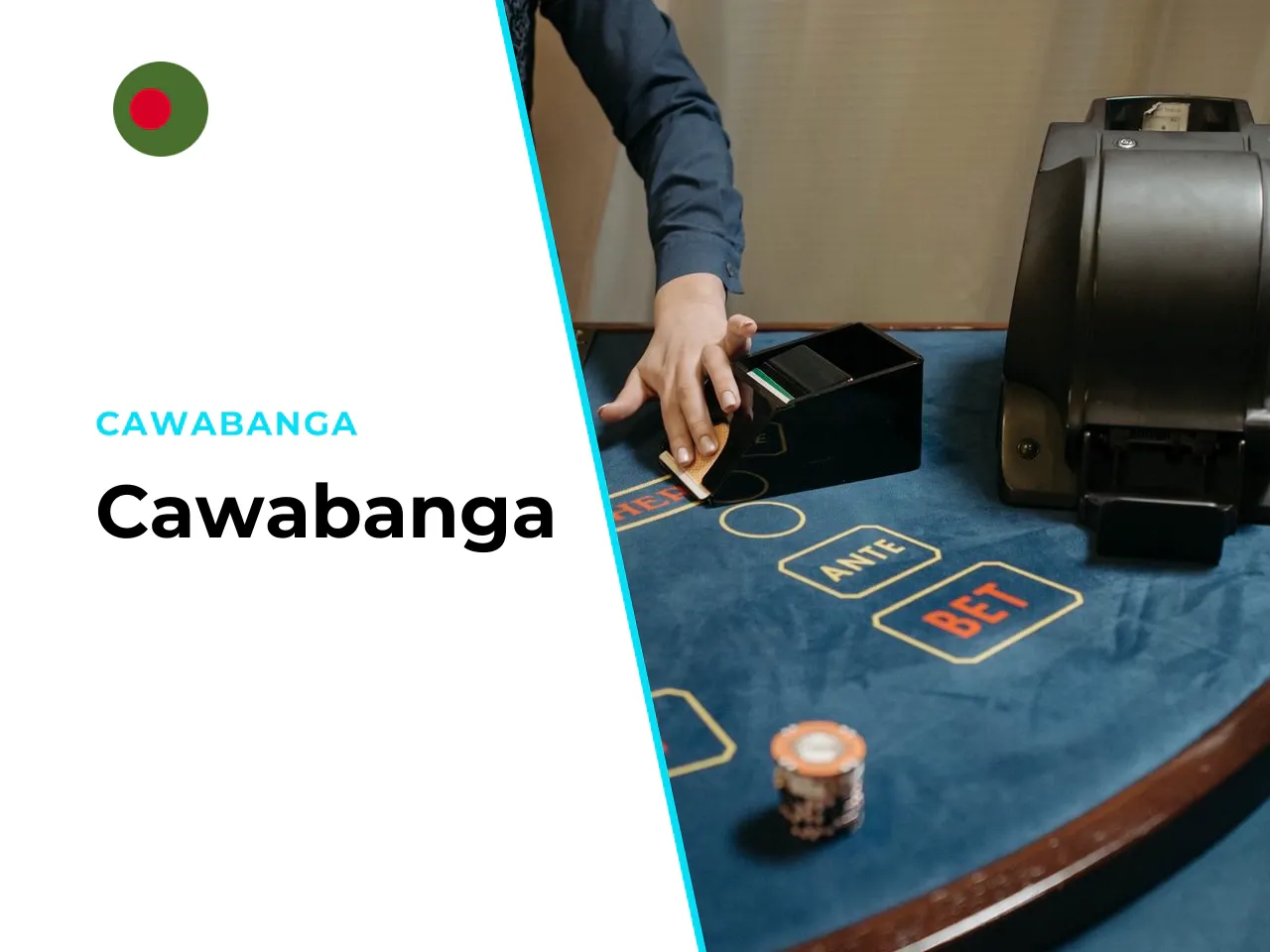
4. Side bets in detail.
Side bets carry a lower RTP than the main game. The higher the advertised top multiplier, the greater the long-run cost of chasing it.
The Teen Patti real money format involves play with actual funds. Players choose tables with suitable limits (micro, medium or high stakes) and control their own stake size. In most game clients the required stake recalculates automatically according to blind or seen status, yet the discipline of knowing what the next chaal will cost you before you click stays with the player.
«An analysis of 2,232,741 transactions in decentralised casinos showed that active players wagered roughly 100,000 USD equivalent across a median of 644 bets.» Study of Ethereum-based decentralised casinos, PubMed Central. https://www.ncbi.nlm.nih.gov/pmc/ethereum-casino-study
That figure illustrates the core financial mechanic of any real-money format. Individual stakes look small, but cumulative turnover compounds far faster than most users expect, and every unit of turnover meets the house edge.
⚠️ IMPORTANT (E-E-A-T and Responsible Gaming Note): Participation in real-money games carries financial risk. Play is permitted strictly from the age of 18, or the age of majority set by local legislation. Play only with funds whose loss will not affect your wellbeing. Before you start, verify the operator's licence and set personal deposit limits.
«Online gambling is associated with depression, anxiety, sleep disturbance and gambling disorder; limits, self-exclusion and clinical support are recommended.» Sarkhel et al., Online Gambling: Mental Health Implications and Methods to Curb Harm (via PubMed). https://pubmed.ncbi.nlm.nih.gov/
Disclaimer: the information in this article is general in nature and does not replace consultation with a legal or financial professional. Online real-money gaming may be restricted or prohibited in your jurisdiction.
If gambling stops being entertainment: free confidential support is available from international services such as Gambling Therapy (gamblingtherapy.org) and BeGambleAware (begambleaware.org), and from qualified mental-health specialists.
Before depositing anywhere, run through these checks:
To keep the transition safe and comprehensible, follow a simple step-by-step algorithm for choosing a format.
Checklist for choosing a Teen Patti format
The first step for any user is mastering the demo. At this stage the card hierarchy has to become automatic: the difference between a pure sequence and an ordinary sequence, the rules for comparing a flush (color), and how kickers work with equal pairs. Add one more drill. For each hand you are dealt, name its probability band from the table above. It builds an instinct for how rare strong holdings really are.
After confidently mastering the rules in demonstration mode, you can move on to Teen Patti online or live dealer formats. Choose tables with the minimum stake size, set a session time limit in advance, and keep following the principles of responsible play. A structured overview of the different Teen Patti formats in online casinos helps you match the format to your experience rather than to your ambition.
This material is educational and analytical. It is not an advertisement for gambling and does not promise income. 18+. If gambling is causing you harm, seek professional help.